Super Robot Wars T is Nuts

I’ve been bothering people for a few days about Super Robot Wars, mostly on Twitter, but I still feel like I want to break down what this game is further, because if you’re like me and have zero affinity for the source material this is the funniest thing anyone has put in a videogame in a while.

Super Robot Wars has been around forever, all the way back to the NES. The problem is, it’s a licensed mashup game. Like Super Smash Bros or The Avengers, it takes a bunch of giant robot anime characters from different properties and puts them together in this weird shared universe for a flashy and satisfying Fire Emblem-ish tactics RPG. The resulting licensing mess is why the only official Western release in the franchise is a sanitized Game Boy Advance spin-off series that doesn’t use licensed robots. That spin-off, in turn, is how I became aware of this game. I didn’t even know this was about licensed anime characters for a while, I just remembered it being a cool portable tactical RPG. I had become aware of the multitude of sequels and spin-offs across multiple consoles since, but never messed around with the limited array of fan translations (because, again, zero affinity for mecha anime). So when this latest entry showed up on Switch with English subtitles for Korea and the rest-of-Asia territories I picked it up from an import site.

And man, it’s just nuts

First of all, this is the theme song in the main menu. It’s called «Tread on the Tiger’s Tail», which is already hilarious.

I’ve never seen the tone of a 50 hour RPG summed up in 60 seconds this well.

Alright, let me walk you through the first hour or so of this thing. After that you either know this is your cup of tea or it definitely isn’t.

You play as this lady here:

You can also play as some dude, but you really don’t want to do that. Plus, he shows up later anyway, so it’s fine.

This is Sagiri Sakurai (or Sakurai Sagiri, if you’re a purist, they give you a button to flip it back and forth). She’s middle management in an aerospace corporation and these are the things the game really wants you to know about her right away:

  • She’s super hot.
  • She’s super greedy.
  • Her management style seems to involve making all nearby female coworkers super horny for her, seemingly regardless of sexual orientation.

This last bit is not a subtle running gag, either. It’s stated explicitly multiple times.

There are a whole lot of conversations between Sagiri and male characters about how she’s all for non-discrimination and actually fairly sensitive towards workplace harassment, but the moment she needs to rally the troops she smiles and makes earnest promises of protection and upcoming promotions and every female character in range immediately gets thirsty. And in case you think the game is being progressive and not creepy, there are definitely token references to her dating dudes and… well, there’s her special attack cutscene:

So… baby steps, I guess?

Overall I do like Sagiri as a protagonist. She’s a one-note cartoon, but at least that note is… quirky and weird, I suppose?

Anyway, for some reason, this corporate division has a side gig murdering people in giant robots. This is the entire setting of the game. They still have daily stand-ups and quote the company mission-and-vision document, but every so often a bunch of terrorists will show up piloting mechas and the team go out and blow them up with lasers. This is not normal in the game’s universe, either. Multiple characters act horrified when they come in for their office jobs and are immediately shoved in a giant robot with a lot of guns. My best guess is they’ve been making these games for so long that the writers have a drawer full of the workplace comedy scripts they’d actually like to make and it’s getting to the point where everything blends together.

Eventually the male player character makes an appearance and his whole deal is he’s super proud of being a salaryman and can’t shut up about it. Honestly, the only reason he’s barely tolerable is that he’s riding one of the robots from the GBA game they released here, so he gets a pass on nostalgia.

They even kept the theme sounding tinny and retro. And those Konami-ish «thwomp-thwomps» are in there, too. So yeah, boring dude narrowly justified.

These are all game-specific characters, but about one mission in, while you’re going through your co-workers’ complaints about fearing for their lives and shooting a bunch of people, actual Mazinger just… shows up out of nowhere, TV theme and all.

The kid in the thumbnail is Koji Kabuto’s… son? Maybe? Like, he’s Mazinger Gohan or something? So I’m assuming this is from some later sequel. That’s the level of not-having-a-clue I’m operating with here.

And setting the tone for the rest of the game, everybody just speaks like of course this guy from some 40 year old cartoon is around. People from different 40 year old cartoons talk to him like they’ve met before a bunch of times and he has this whole justification about why he gets to tag along even though it makes no real sense. Best I can put together, this whole web of assumptions is a mix of these games having their own continuity where some of these characters have actually met before and them just making stuff up as they go along. It’s a beautiful mess.

Honestly, this is a great way to introduce someone my age to the licensed side of the game, and it’s absolutely accidental. This giant robot in particular is the one a Spanish guy my age would recognize immediately even if they hadn’t ever heard of a Gundam in their lives. I don’t know if Mazinger is also the go-to mainstream giant robot in Japan, but it definitely strikes a chord for me. I mean, granted, this is the wrong Mazinger, in that he’s not Mazinger Z, but some other later-day sequel robot dude.

But still. That theme.

He still shoots his fists out at people, too.

At this point this very nerdy game has me for the faint hints of nostalgia, despite being about to engage with dozens of hours of properties I don’t know or understand. But the thing that convinced me that I was going to keep playing it, the thing that solidified this as a semi-intentional parody rather than a heartfelt nerdy mashup was this Transformers-ass idiot:

Transformers-ass idiot.png
Don’t quote me on this, but this may actually be a bunch of robots mashed together and piloted by a separate, human-sized robot.

I had not seen this thing before. I googled it later, and apparently there is some web of toyetic licensing weirdness that means that yeah, he’s based on some of the same toys as a few of the Transformers or something? It’s not important.

What matters is that he shows up acting like a 1950s Superman cartoon (even though as far as I can tell he’s from the late 90s) and, most importantly, that whenever he gets in a fight you get to hear the single stupidest piece of music ever composed by human beings.

I rest my case.

If you find that clip bonkers-bananas-hilarious then this game is for you. This transformer going berserk on people with helicopter blades while a dude belts «GAGAGAGAGAGAOGAGAGAIGAR!» over some unhinged saxophone  is not even the biggest dork in this thing. That’s barely the first hour of the game, not even past the prologue. It keeps going like this, jumping between heartfelt, derivative and semi-deliberately stupid. I genuinely believe the less you know about the shows it’s based on the better it gets.

Man, that feels good to get off my chest. I’ve been staring at this thing for several days in disbelief, having no idea what to make of it and holding back the urge to show it to people and go «are you seeing what I’m seeing?». I just had to share.

Dragon Ball FighterZ: «Soft» Shared Combo Flows

Look, I’m not gonna lie to you, this thing is the real reason I’ve been writing these all along. Dragon Ball FighterZ doesn’t just have my favourite piece of game design this year, it’s easily my overall game of the year as well.

I can’t remember the last time I got so deep into a competitive game, and I’ve had all year to think about why that is. See, normally these games have breaking points, places where my completely pedestrian gaming skills bump into the frustration zone and I bounce off. This is easier on synchronous multiplayer games because… well, humans suck, and I don’t like doing things with them. The band where competitive online multiplayer is still satisfying for me is razor thin.

So how did DBFZ pull it off? The answer is deep, nuanced, and today I write it all down. With visual aids. This is gonna be a ride.

So, if you’ve heard about this game at all, maybe you’ve heard that it strongly flattens the execution of basic mechanics. Special moves are all quarter circles. Supers are quarter circles forward and two buttons, Ultras (level 3s in DBFZ lingo) are quarter circles backwards and two buttons. So far so intelligible.

It also gives you autocombos. Mash a button and you get a few hits in a row. The low button in particular gives each character a couple of hits, a launcher and an air follow-up. Like this.

Mash that L!

On the surface this also isn’t that special. Other games have done versions of the same thing. That surface impression is wrong. I’ll get back to why that is in a minute. For now, the point to remember is that all of the above applies to every character in the game, no exceptions.

For the first few hours or days those few mechanics above, plus the universal basics of the genre were how I was playing the game. It’s all flashy and competent, and unlike other competitive fighters, the autocombo damage is actually cranked pretty high. There’s definitely manual combo stuff you can do that will deal less damage than a clean autocombo chain. It’s a respectable way to play casually. It’s fun.

And then you fight someone good online or you see a tournament and there’s, of course, some stuff happening out there you really can’t do. There’s some stuff, in fact, that seems to go against the rules, as the game explained them to you. So maybe you go “what gives?” and google some tutorials online. This bit of metagame is also par for the course in fighting games.

The difference, though, is what the video tells you. It tells you that you can press down and heavy at the end of an autocombo to kick the other guy up, then double jump and do the autocombo again. Doesn’t work with all characters, but it works with most. This is what it looks like.

That extra down-L I accidentally got in there is why I can’t play Vegeta. I promise that makes sense if you play this game.

That bit? That’s the best bit of design this year. Easy.

Because it’s obvious, and fundamental and easy to do on the controller, but it’s not uniform. This is where the brilliance of the light autocombo transcends just being an accessible shared mechanic.

Each character has a different autocombo with different properties. They each interact slightly differently with this combo path, and not all of them extend with the default down+heavy trick. So you know there’s more to it, and you get your first hint that you may want to start learning characters, not just mechanics. But by now you’re in deep, you’re getting good and having fun and the fundamentals are always there for you if it all becomes too much to manage.

The rabbit hole keeps going, and it’s all designed this way, with general rules broken down by exceptions or fun details for you to discover and learn. Hey, do you know what that extra air combo step does? Well, it makes the enemy scrape along the ground, rather than fall on their feet. Enemies in this state can be hit with a super, so you can do stuff like this.

SCRAAAAAAAPE-THUNK!

I spent my first few matches wondering why everybody was able to do that but me, so this was a very rewarding moment of discovery. Oh, and press the assist button and you’ll tag in another character for another super, at the cost of an extra bar. Congrats, you can now turn a hit into a lot of damage and safely swap characters.

Compression is giving out on me. This game hates algorithms.

That’s the basics of the combo structure made accessible, but the game applies the same principles to starting and extending combos as well. There’s this universal vanish move, which seems like a cool nod to the show, but is actually a secret way to make the back half of the combo tree be just as intuitive as the basics.

So you can vanish to hit a guy from behind, like this:

But as it turns out you can also do it in the middle of a combo.

In fact, you can combo into it whenever the other character is reacting to a hit.

Like, any hit. No matter from where.

Oh, and did you see how the other guy just bounces off the edge there? It clearly looks like you may be able to do something to catch them back up, huh? But the normal superdash move doesn’t work for that.

Working around this is deliberately challenging, but it only becomes a thing after the game is pretty sure you’re not giving up.

Each character has at least one way to pick someone up from it, though, so it’s Google time again, this time for a character-specific combo that you’ll want to accurately nail on muscle memory alone.

You can get a bunch more hits into that combo, but you get the point.

It’s not immediately obvious, but this rounds up the combo system with a neat little bow. It means you basically have a universal combo reset, so now you can confirm any hit, no matter how awkward, and stitch combo pieces together, even across multiple characters.

This in turn means that, up to pretty high competitive levels, you don’t need to learn very long stuff or intricate timing to play effectively, you just need to be able to stitch together the smaller bits you already know on the fly.

Well, OK, so there is an extra bit that really caps this off, and that’s all the actual, manual optimal combos that you can still learn and do like in any other fighting game.

Full disclosure: I have never pulled this off outside of training mode.

And there’s this whole layer of combo extensions using assists, although both of those still rely on the autocombos a lot.

I haven’t even talked about assists and hidden expendable resources. This game is huge.

And… look, it’s a fighting game, it goes deep. But the point is the combo system is designed for self-learning, not challenge, and it executes on that goal flawlessly. It hand-holds you with automation until you’re ready to learn some nuance, and then it gives you only a little bit; pieces that work in common ways most of the time. And once you’re good with those it throws a little more at you, with timing and creative, free-flowing build-a-combo stuff that still works consistently but is character specific.

It is friendly. Understandable. By the time you’re at the end of this deliberately designed path, you’re deep enough to be looking up frame times and tier lists anyway. The basics still work, though. Those autocombos never stop doing 30% damage. You can break this game out at a party and it’ll be fun to mash.

Look, I hate tag games. Marvel Vs Capcom killed the franchise for me. I don’t like most “anime” fighting games. Arcsys is a solid dev with a striking sense of style, but their games are overly mechanic and deliberately dense to a point where I can’t get into them even if the wrapper intrigues me. I was ready to give this a try and move on.

I didn’t move on.

I have no idea where this system came from, although I would love to hear how much the creative thought process was going exactly for the user path I broke down above. What I do know is that whoever came up with it fixed tag games and anime games. All the way. This is the most accessible fighting game since Street Fighter IV, coming from the most obtuse corner of the genre. It’s a small miracle of intricate-but-approachable gameplay design and hands down the best bit of game-making I’ve seen this year.

Bard’s Tale IV: Small-map RPG

It’s been a big few years for the sprawling action RPG. Since Skyrim proved it commercially viable a decade ago (urgh), it hasn’t just generated a handful of huge superproductions, but also seeped into other open world action games, now full of NPCs, side quests, loot and stats.

So I’ll take the opportunity to stick up for the small-map RPG. The Dungeon Crawler. The focused campaign book equivalent to the huge game systems everybody is gushing about.

At their best, these barely feel like they fit in the modern concept of RPGs at all these days. Ever since the early “CRPG” era they have been more of a narrative puzzle box, a setting with a number of riddles to solve in succession. Underappreciated modern retoolings like Legend of Grimrock or Might and Magic X got this and built tight, engaging packages, but for my money nobody has delivered on this concept quite as right as Bard’s Tale IV yet.

It’s the notion of the puzzle at the core of every action that sells it. Dungeons are the obvious place for that, as the puzzles presented in those are explicit, but that ethos permeates every other area of the game. Navigation is a puzzle, full of environmental abilities unlocking new areas and looping paths shortening backtracking. Combat is definitely a puzzle, with a focused CCG-like system of resource management that allows for surprising flexibility.

I wonder if you could get this combat system down to a competitive Gwent-like thing.

And the gorgeous, nostalgic end result of these disparate elements sharing a guiding principle is why I wanted to list it here. Bard’s Tale IV builds a place. All those huge, expensive games have increasingly huge budgets, but most don’t manage as much of a sense of familiar reality as Bard’s Tale can with a handful of locations and a bunch of puzzles. You end up knowing the geography, revisiting the characters, ruminating old problems from the beginning of the game hours after the fact. If those behemoths from the majors create a fun holiday in a foreign land, Bard’s Tale makes a little home for you to hang out in, maybe with a creepy attic somewhere you can explore on a rainy night for some excitement.

You find this door 5 minutes in, I got it open 10 hours in. There’s barely anything in there, but it felt so cathartic.

It’s a charming, effective approach. I’ll admit that the tinge of nostalgia for the old PC RPGs it’s channeling helps its case (even if I didn’t play much of the original Bard’s Tale trilogy at the time), but there is legitimate value in its take on fantasy outside of that context as well. It’s certainly a late but worthwhile addition to my favourite game design of 2018.

7 Billion Humans: Coding Puzzles for Crowds of Agents

People who worked in games with me know I’m not much of a programmer, which is probably why I love games where coding is a mechanic. I got into the genre with SpaceChem, which is pretty abstract as these things go, but the last few Zach Barth games out there straight up give you a dumbed-down version of assembly language, a printout of a fake zine and tell you to go nuts.

The Tomorrow Corporation already took a stab at this genre once. Human Resource Machine was cute and weird, as is all their stuff, but it didn’t quite click with me. Its cardinal sin was its UI. The touch-focused interface was a bit too clumsy, so when you got yourself in trouble on the harder challenges it was too hard to patch things up without starting over from scratch. There were just easier, more convenient versions of the same concept out there for people with keyboards for me to stick with it, I suppose.

So it took me a bit to give 7 Billion Humans a go. It’s a very direct sequel, and I avoided it until it launched on Switch and I figured I could make do with the bad interface if I was ever stuck on a plane for a few hours. Turns out, I was selling it short.

7 Billion Humans doesn’t fix anything that was wrong with Human Resource Machine, which is a weird way to make a fantastic game and one of the reasons I find it fascinating. Well, alright, there is one key fix: you can make multi-condition IF statements now without having to nest them all in a large chain. That’s a pretty huge improvement right there, and it would probably have made the previous game much more playable. It’s a bit of an amazing example of a single usability improvement that improves a game fundamentally, actually.

But the key change in place is that they go multithreaded. Instead of a single “human” executing commands, LOGO-style, now you get an arbitrary number of little white collar workers running instructions in parallel, and this is a bit of a revelation. Rather than building a hack for each level, now you’re looking for general solutions that you can apply without knowing the context of what’s going on, which is a great snapshot of how software making has changed over time. It also means you can… well, *design* stuff. One level asks you to make a rudimentary AI to navigate a maze. Others suggest you find optimizations for running a large number of tasks as fast as possible.

See, some of the Zachtronics stuff feels like it’s using the coding gimmick to capture the culture around the job. The games talk about scientists, engineers and hackers doing their thing, where the job is the puzzle and the culture is the story. 7 Billion Humans builds a sequel to teach you how to do more of the coding stuff instead, and in the process it becomes one of my favourite edutainment pieces ever.

I still can’t code for crap, though.

Turn Preview: Into the Breach

Being lenient or punishing on execution is a crucial design choice, and we sometimes struggle to talk about it because “unforgiving” and “hard” often get mixed up. Into the Breach is definitely a hard game. Tough as nails, actually. It expects you to play optimally at all times and it does not shy away from unwinnable scenarios if you as a player allow the conditions for them to surface.

It is definitely not unforgiving, though. It looks at what quick saving does for this sort of tactical experience and it builds that effect right into the UI. It draws the consequences of your actions in a perfectly deterministic way so you don’t even have to bother to save-scum, then goes “see what good it does you” and cranks up the challenge anyway.

It is so confident on its ability to push you that it’ll even give you a once-per-map full turn mulligan. It doesn’t even need the fiction that actions have consequences to make you work for your win.

That isn’t just hard to do, it’s brilliant. It’s amazingly confident. Into the Breach is deconstructionist game design, turn-based tactics simmered down to the essence. And the essence, it turns out, includes the trial and error of save abuse. Justin Ma and Matthew Davis understand that and share that observation by making the game around it. It is easily one of the best pieces of design from anyone this year.

Magical Drop Series: Continuing Gameplay During Combo Animations

I love this little flourish. Love it.

All these games spawn from Tetris, and most stick to the quasi-turn-based template from the granddaddy:

  • Here’s a thing, deal with it.
  • Done? Alright, let me check what happens now, by the rules.
  • Cool, that’s finished, here’s another thing to deal with.

The clip above is from Magical Drop III, but the whole series has this clever way to avoid that core rigidity of the sorting puzzle. It just lets you keep making changes to the board while it’s figuring out the effect of the changes you just made.

It’s genius, really. You still have to do a thing at a time, no real way around that, but my removing the computer’s “me time” from the equation the pace is immediately boosted. Pair it with responsive controls and it makes for a game you can play as fast as you can push buttons.

At the end of the day, this is a bit of a cheat. Magical Drop doesn’t even need to be as polished, elegant or complex as some of its peers. Make the game this fast and you can simplify it, reduce the constraints on the design. Dexterity, reflexes and speed in pattern recognition are going to take the place of understanding ruleset. You turned the puzzle into an action game.

And, to be fair, whoever designed this for Data East didn’t come across the idea in a vacuum. The same year the first game in the series came out, so did Puzzle De Pon/Tetris Attack, which is fundamentally the same game, built on the same principle.

There was definitely something in the late 16-bit era that made this… well, make sense. Perhaps the control over the tech was finally there for these synchronous actions to run bug-free, or maybe players were getting dexterous enough and were more receptive to this type of challenge. Either way, it’s a gorgeous concept, and one that I feel went underappreciated in the west when it first popped up. Maybe it still is now.

Dead Cells: Movement

I promise I will eventually make one of these that isn’t about making faster, more responsive controls, but it’s been a good year for, you know, faster, more responsive controls.

I mean, look at Dead Cells. It’s a run-based, pixel art early access Metroidvania. It should be directly interchangeable with a dozen other games. The reason it’s special — and oh, boy, is it special — is by and large how it feels to move around in it. And, as in other entries on this list, it’s also a thing that is hard to talk about because none of its component parts on their own are particularly unique, either.

I mean, there’s a wall jump. Most of these have a wall jump. Only it’s not a wall jump at all, it’s a wall run that gives you plenty of time to make a second input. In fact, waiting to wall jump gets you where you want to go faster. There’s a dodge, which most of these games have. Only it’s not a stingy, near-useless Castlevania dodge, it’s a meaty, long roll with a lot of invincibility frames that smoothly cancels into an attack on either direction. There’s a fall-drop, too, which means jumping down a shaft isn’t a passive, uncontrolled wait, but a satisfying, quick action. It helps that it lands with a meaty thunk that doubles as an attack.

And that’s the other fuzzy but crucial part of the movement design on Dead Cells: it all doubles as a combat mechanic. Everything cancels into everything, and you’re rarely if ever caught waiting for a ledge grab or the wind-down of an animation.

When Dead Cells first went live on Early Access there was a lot of press and marketing chatter about the Dark Souls connections, but it conceptually plays in the exact opposite way. It’s the anti-Dark Souls. If you can time it on the controller, you can do it. This is, by the way, not as simple as having no delays anywhere. All the same component pieces are here. All the gaps, delays and animations are accounted for, they’re just tuned for this smooth, free-flowing feeling, empowered by a pipeline that allows plentiful, easy-to-produce frames of animation. It’s a massive achievement in polish and resourcefulness for a small studio.

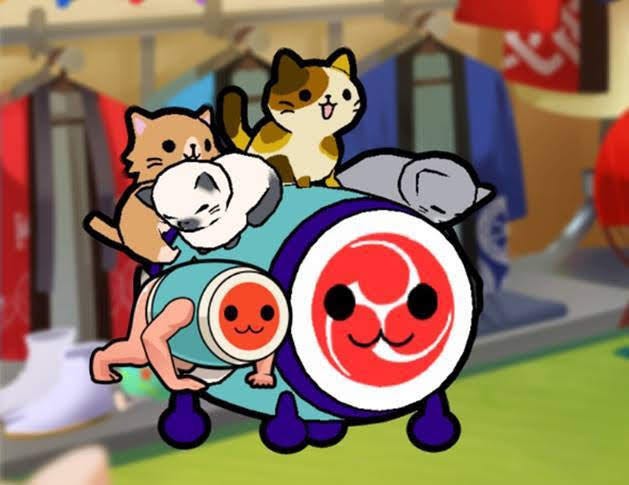
Taiko no Tatsujin: Drum Session: Ghost-based Asynchronous Multiplayer

Taiko no Tatsujin has basically been the exact same game since 2001, and that’s alright.

If you don’t know it, Taiko no Tatsujin is a rhythm game in which you play taiko drums over an array of J-Pop songs. Actually, you probably don’t, because over here you’re probably playing on a controller, where it’s a blister-fast two-button rhythm game. Notes come down a rail at ludicrous speeds, you tap the sequence in and the whole thing feels like aggressively competitive Morse code. It’s been going for over 15 years, and for most of that time it’s been a niche rabbit hole for import snobs to geek over. I got into it on the outstanding 2005 PSP version, myself. Since then the game has looked and felt fundamentally identical with very minor tweaks on each iteration.

But adding to a stale formula is not why Ranked VS is such a great mode. It is legitimate one of the best multiplayer experiences this year, bar none. In Ranked VS you are randomly matched up to another player of the same skill on a random song. You don’t play them live, though, you play a recorded ghost of their performance.

Their unflinching, uncaring ghost.

Only it’s not unflinching and uncaring. The recording was made while they in turn played against the ghost of a third person and unlike an AI they’ll make mistakes. They’ll get nervous. They’ll… well, flinch. And if you don’t, you’ll win. There’s a math to it in this series, to when you miss a beat versus when your opponent does, and how long of a combo you have left to catch up. And even if you both hit every note, Taiko no Tatsujin scores on timing as well as a binary hit/miss, so there’s always a winner and always an incentive for staying focused. The game even records your extra drum hits at the start and end of the songs, so if you want to attempt some communication (or just make noise to distract your rivals) you can do that, too. The person you’re playing with now won’t see it, but you’ll mess with someone else down the line.

And then you end the song, see a cute cartoon drum play bingo for a few seconds, unlocking customization goodies, and move on to the next track. Which starts immediately, because asynchronous play means no matchmaking wait. Do that for half an hour, and you’ll be a sweaty mess, all shaky hands and shattered nerves.

Seriously, this thing is SO clever.

It’s a great testament to iterative design, not because it creeps up from mediocrity to greatness, but because it keeps what works and builds more things that work on top. There’s nothing here that feels like a first attempt or a placeholder. The new content slots right in, at the exact same level of polish as the tried-and-true decades-old core. There’s a little blip set in the periphery of your view to let you know if you’re ahead without having to scan both scoreboards, for instance. Matchmaking starts with a five-song scripted run to get your base rank and then it does a spotless job of providing close matches.

Oh, and one more thing before I call it. This thing gets weird. Look, yeah, I get it, it’s the kind of packaged weird that a certain brand of Japanese nerd fare revels on, but man, Taiko PS4 distills it to a science. There are weird-ass vocaloid songs in there, there are dancing fish and ninja dogs, and there’s… whatever this is.

It haunts me. I love it.

Marvel’s Spider-Man: Side Mission Unlocks

Man, these are getting hard. In the cool design things I’ve called out so far it was pretty easy to break down the cool bits. You just basically see them and, you know, they’re right there for the taking.

This, though? This one would probably take the better part of a week and a pretty sizable flowchart to break down, because it’s this fuzzy, balance-driven unlock flow spread over a 20 hour AAA release. That’s not trivial.

And you can’t just sleepwalk your way through it with vagaries, either, because at some point you may be expected to clarify just how it’s any better than Arkham City’s version of the same thing, which someone at Insomniac certainly spent the better part of a week deconstructing into a flowchart.

Okay, deep breath. Let’s give this a shot.

So Marvel’s Spider-Man has the best side quest delivery pace of any open world game this year. If you’re thinking they just cloned Arkham and called it a day, let me hit you with some stats, as reported by PS4’s trophy system.

Do you know what percentage of players collected all backpacks? That was 48%. All Kingping lair combat side quests? 42%. Collected all the flying pigeons? 37.4%. Took a picture of all landmarks? 38.5%.

I could bore you with more comparisons, but just take my word for it, that’s double digits above comparable titles. It’s a lot.

So let’s go with it. Spider-Man got people to do a bunch of chores voluntarily and nobody thought it was a grind. How?

Well, part of it is the rollout. Spider-Man holds back some side quest chains until very late. I mean very. There’s a twist two thirds of the way in I shouldn’t spoil, and it comes with a full set of side quests. By that point you as a player are probably just getting ready for the game to end, and then it drops not just a whole new story arc, but also a matching set of side activities.

You’d think this is a churn point, but it isn’t. At least not when done well. You can mess it up by filling in the blanks in your flimsy three-act structure with a bunch of fetch quests, which will likely just make people forget what they were supposed to want or do. And that, I think, is why it’s so hard to explain this structure trick. It’s a qualitative thing.

Spider-Man does it right. The story veers hard and changes the state of things, and side quests emerge from the new situation to give you new things to do in the new state of the environment. And because the early scarcity of side missions likely led to you engaging with more of them sooner, now the remaining amount is still manageable and you’re not tempted to give up on any one chain.

I don’t know about you, but this is such a “duh!” moment I feel dumber for never having thought of it before. Why would you not manage the order and pace of engagement with side quests? Every other open world game frontloading a million boring, repetitive side quests seems incredibly silly now.

That’s not the only reason all this side content is so good, though, the quality of each piece of content also helps. From the balance of big, involved side-missions versus one-off collectibles to the percentage of missions that are emergent rather than always open. There’s the amount of custom voice acting, the dedicated areas, the crafting material yields driving the pace of the unlockable rewards… Hey, have I spoken about how they introduce discrete, manageable challenges for extra tokens early but time and score challenges only at the end, when you’re at the peak of the learning curve? Oh, boy, I’m getting into the weeds here, aren’t I?

Seriously, those side goals suck in Assassin’s Creed. It’s not about what, it’s about how.

Well, ok, so I admit defeat. This one is too big to summarize in a page and a half of text and a couple of gifs.

That’s alright, though, because the point is made and it should be pretty obvious by now. This game does a lot right in Insomiac’s usual workmanlike fashion, but this bit? This bit is world-class, and a huge part of why the game is such a comfortable place to hang out on without sacrificing narrative in the process.

I wonder if I should break out some flowchart software and New Game +, though.

Return of the Obra Dinn: Main Gameplay Loop

So… can’t really talk about this one without spoiling things that should be experienced instead. That’s partially why the cool design bit in question is just, you know, the game. It’s a very focused single thing that you do for three or four hours (which is the perfect length for a videogame), and then you’re done.

I’m still gonna talk about it a bit, so beware of spoilers after the image.

If you’re here it’s because you’ve played this, then, right? I can skip explaining the mechanics, right? I mean, you can find out about them by just playing the damn thing, which you’ve done, so let’s just get to it.

Return of the Obra Dinn is very new and very old, and that makes it very cool. At its core it’s a logic puzzle, like you may find in an old puzzle book. Murder-mystery Sudoku. It gives you a bunch of information that is mutually exclusive and asks you to parse it to answer specific riddles.

The videogame part, really, just gives it scope. Size. The logic puzzle at play is huge, compared to what a written version would have been able to support without driving you insane with notes and diagrams. Computers get to keep track of it all for you.

This in turn frees Pope to build a more intricate puzzle, where information jumps around nonlinearly, bringing itself back to the forefront hours after it’s introduced. It’s a cool trick, filling in all the blanks until it all makes sense. There is no real progression here, no new mechanics. The whole thing is a single puzzle box, and it clicks at the end, into a single configuration.

It must have taken a ridiculous amount of planning to set it all up, let alone to find a path through the content that both tells the story and ramps up the challenge without ever holding anything back from the player other than more puzzles.

And hey, the gorgeous dioramas don’t hurt. I’ve seen this on lists of “games we most want to see in VR”, and it makes perfect sense that you would. The entire presentation seems custom made for it, it’s almost confusing that it’s not supported.

There are some frayed edges to Obra Dinn, mostly around the relative shallowness of the story hidden by the puzzles. As a one-sitting brainteaser, though, it’s magnetic and effortless. Some of the games I’ve talked about spread themselves out over layers and layers of… well, game, but Lucas Pope crafted, in a handful of hours, a path from never having considered this particular game concept to masterfully whizzing across pages of the book, filling in data and cross-referencing info. It’s a single experience, a full learning curve to solve a big, intricate puzzle, and it’s one of the best pieces of design this year.